By the Third Eye Marketing team · Published 22 November 2026 · 5 min read
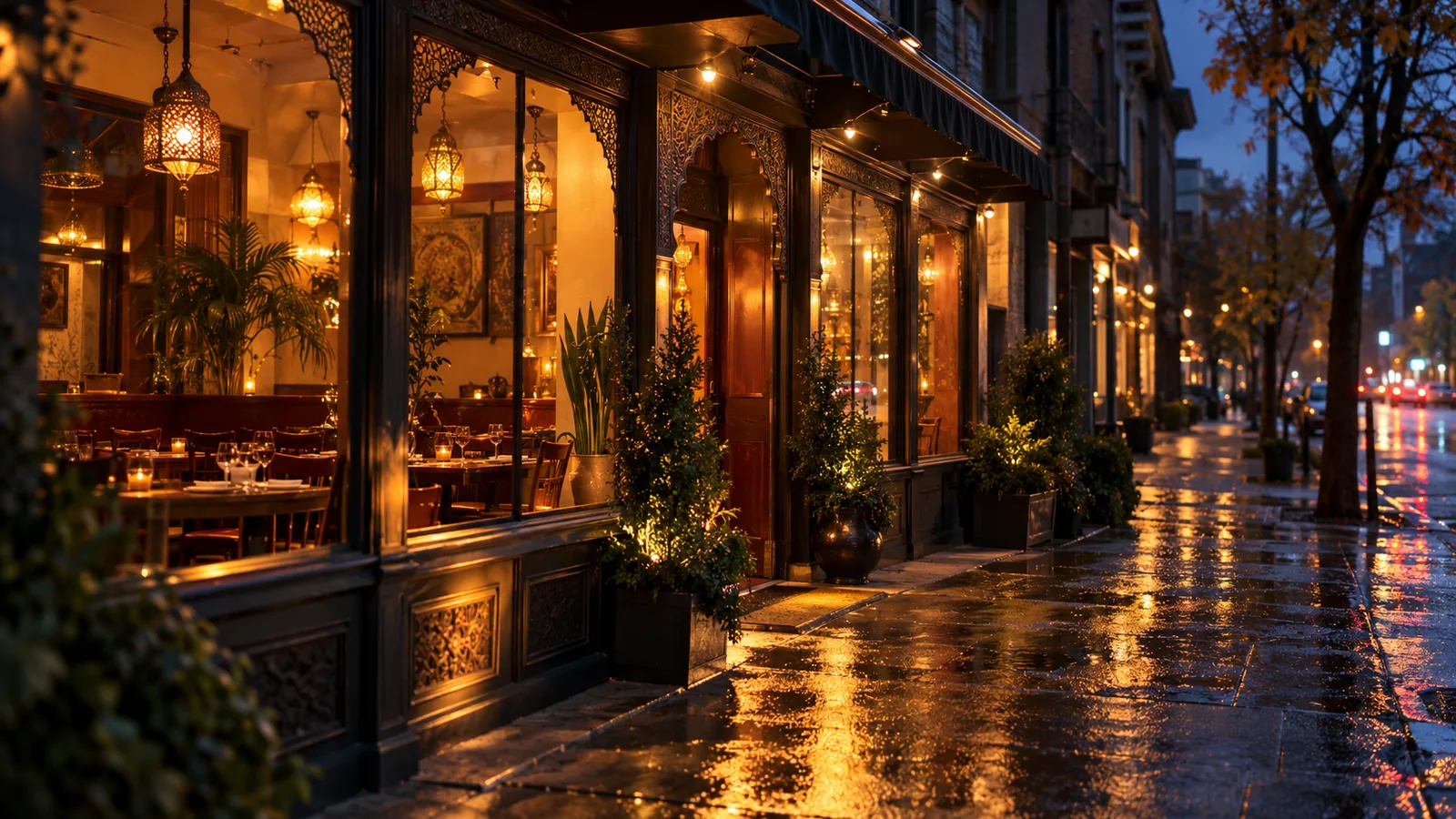
How Google decides which restaurants to show
When someone searches “thai food near me” or “best brunch in Kitsilano”, Google shows three kinds of results: the map pack (three restaurants with a map), the regular web results, and increasingly an AI-written answer at the top. All three read from the same raw material: your Google Business Profile, your website, your reviews and other sites that mention you.
For the map pack, Google publishes the three factors it uses:
- Relevance: how well your profile matches what the person searched for. Categories, your description, your menu and your reviews all feed this.
- Distance: how far you are from the searcher or the place they named. You cannot change this, which is why a restaurant two streets away can outrank you.
- Prominence: how well known you are, online and off. Google says review count and rating, links and articles about you, and your position in web results all count.
That is the whole game. Every step below improves relevance or prominence.
Step 1: Claim, verify and categorise your Google profile
Claim your Google Business Profile and complete verification. Then choose the most specific primary category you can: “Ramen restaurant” or “Punjabi restaurant” beats plain “Restaurant”. Add secondary categories only if they are true (for example “Caterer” if you really cater).
Use your real business name. Google’s guidelines do not allow keywords or locations to be stuffed into the name (“Best Pizza Surrey – Tony’s”), and profiles that do it can be suspended.
Step 2: Fill in every field, then keep it current
- Regular hours, and special hours for every statutory holiday. Wrong holiday hours are the fastest way to earn a one-star review.
- Menu link, ordering link and reservation link.
- Attributes: dine-in, takeout, delivery, patio, wheelchair-accessible entrance, vegetarian options and so on. Only tick what is true.
- Photos of the food, the room, the front door and the menu board. Add new ones every month.
- A short description in plain words: cuisine, neighbourhood, what you are known for.
Step 3: Put your menu on your website as text
A PDF or a photo of a menu is hard for search engines and AI tools to read. A menu page with dish names, short descriptions, prices if you publish them, and dietary notes (vegan, gluten-free, halal) as real text gives Google and AI assistants the words people actually search for. Keep the PDF as a download if you like, but make the HTML page the main one.
In our own study of 237 Vancouver and Surrey restaurant websites (October 2026), only 18 percent had complete local business markup. Missing or unreadable business information is the most common gap we see.
Step 4: One clear page per location
Each location needs its own page with the full name, address, phone number and hours as text, a map, parking or transit notes, and a booking or ordering button. Your name, address and phone should match your Google profile character for character. If you have two locations, do not make one page that tries to rank for both cities.
Step 5: Add restaurant structured data
Structured data is a small block of code that states your facts in a format machines read without guessing. For a restaurant that means the Restaurant type from schema.org with your name, address, phone, opening hours, cuisine (servesCuisine), menu URL and whether you accept reservations. Google documents how it reads local business markup in Search Central. It does not lift rankings on its own, but it removes doubt, and doubt is what keeps businesses out of AI answers. Our free restaurant schema generator writes it for you.
Step 6: Earn reviews every week, and reply to them
Reviews feed prominence, and people read them. BrightLocal’s 2026 consumer survey found 47% of consumers will not use a business with fewer than 20 reviews. Ask at the moment guests are happiest, make it one tap with your direct review link or QR code, and reply to every review, good or bad. Never offer a discount or a free item for a review: Google’s policies prohibit incentivised reviews. Our guide on getting more reviews for your restaurant has the details.
Step 7: Make your listings match everywhere else
Google and AI tools cross-check you against other sites. Make sure your name, address, phone, hours and website are the same on Apple Business Connect (Apple Maps), Bing Places, Yelp, TripAdvisor, OpenTable or your booking platform, and every delivery app. An old phone number on one directory is enough to create doubt.
Step 8: Show real photos and short video
Diners decide with their eyes. Fresh photos on your Google profile and short videos of dishes being made give people a reason to choose you, and give Google more signals that the business is active. Real food, real room, good light; no stock photos.
Step 9: Publish pages people actually search for
Beyond the menu, the pages that tend to earn searches are specific: private dining and group bookings, catering, brunch, happy hour, gluten-free options, a page for a signature dish, seasonal menus and events. Each one should answer real questions (how many guests, price range, how to book) in plain words. Do not create thin copies of the same page for every nearby city; Google treats those as doorway pages.
Step 10: Measure what matters
Rankings move every day and differ by location, so judge results on actions. Your Google Business Profile performance report shows calls, direction requests, website clicks and bookings. Google Search Console shows which searches bring people to your website and your average position. Check both monthly, and compare like with like (this October against last October). If someone shows you only a ranking screenshot, ask for these numbers instead.
Common mistakes to avoid: a PDF-only menu, holiday hours left blank, a keyword-stuffed business name, duplicate Google profiles for one location, buying reviews, and changing your phone number without updating every listing.
Want it done for you? Our restaurant SEO agency service covers all ten steps for restaurants in Vancouver, Surrey and the Fraser Valley, and we never promise a ranking.
Sources
- Google Business Profile Help, Tips to improve your local ranking on Google (relevance, distance and prominence). support.google.com/business/answer/7091
- Google Business Profile Help, Guidelines for representing your business on Google (business names, categories). support.google.com/business/answer/3038177
- Google Search Central, Local business (LocalBusiness) structured data. developers.google.com/search/docs/appearance/structured-data/local-business
- Schema.org, Restaurant type (servesCuisine, hasMenu, acceptsReservations). schema.org/Restaurant
- BrightLocal, Local Consumer Review Survey 2026, published 11 February 2026 (1,002 US adults).
- Third Eye Marketing, Vancouver and Surrey restaurant website study 2026 (237 sites, 23 October 2026).
Free tools
Generate your structured data with the restaurant schema generator, draft calm replies with the review reply generator, and see the numbers behind local search in our local search statistics. Deciding between SEO and ads? Read SEO vs paid ads for restaurants in Vancouver.